Favorite Historical CYAL Book

As a kid I never really liked historical fiction, but as I got older I grew to appreciate this genre. When I was in middle school the Help had just come out and a good friend of mine was reading the book. I decided to try it and I loved it. The storyline was compelling, the characters were witty and charming, and it made me cry. All in all the hallmarks of a great book. What really made the book special to me was that it was the first historical fiction books that I actually liked. To this day I still reread the book because it was that good.

The book takes place in the early in 1960’s in Jackson, Mississippi. It follows the story of three women during the Civil Rights movement and how the racial tension is making an impact on each of their lives. They are trying to write a book about what it is like for “the help” and the racial inequality they face everyday. This book was meant for slightly more mature audiences because it deals with hard topics like racial violence and assault. That being said it does still have value for people today. This book teaches us what the world was like during the segregation era and why we can never let it become like that again. It teaches us to love one another despite our differences. It also teaches us that doing the right thing is never easy but is almost always worth it in the end. This book has always had a special place in my heart and if you haven’t done so already I highly recommend that you check it out.

-MP
Favorite Historical CYAL Book

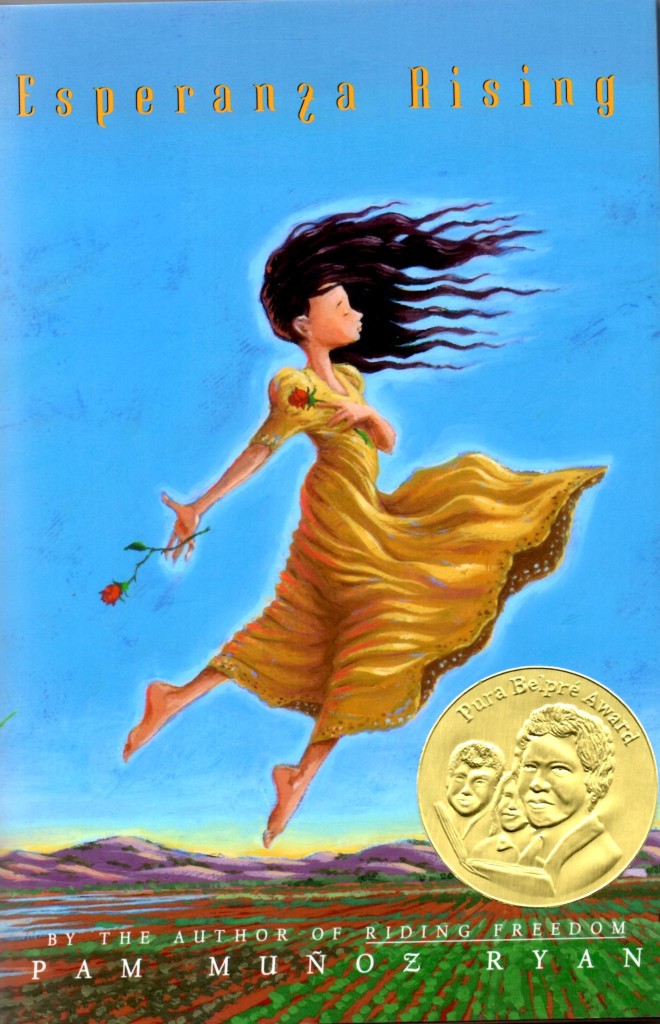
As I was thinking about my favorite historical fiction book for this week, one automatically came to my mind: Esperanza Rising. This was my favorite because I loved the theme of perseverance and determination. Esperanza must learn to live a new life as a poor migrant in California after her father is killed, and her home in Mexico is destroyed. When Esperanza’s mom is sent to the hospital, she begins working in the fields to support them. Esperanza then has a breaking point saying she has lost all hope, and Miguel, a friend who she confides in, disappears. Eventually, Miguel comes back with Esperanza’s grandmother, and her mother returns from the hospital. She has struggled a lot, but realizes that those had made her stronger.

While this book is set in the 1930’s, I believe what makes this book historical fiction is the implication of immigration. During this time period, there was major immigration happening from Mexico to America due to the Mexican Revolution that was happening during the time. Also, it is set during the time of the Great Depression where people in America were struggling to make ends meet. Being an immigrant during this time was not beneficial either because many immigrants lived in poor housing conditions and were not being paid a livable wage either.

Looking back on this book, I believe that the book is meant for two audiences: young adults AND matured adults. Young adults can learn how to take on more responsibilities and “mature” in life like Esperanza did after she moved to California. They also can see how multicultural families grow up so they realize that everyone has a different experience than their own. Older adults can grasp the harsh realities that immigrants were facing then and even today. They can see where different sociological factors (like race, ethnicity, and socioeconomic class) intersect and connect it to their own privileges or disadvantages that they acquire through the social world.

-SK

Critical Lens Theory

When I finished reading the book Don’t Touch My Hair by Sharee Miller I was shocked at how much I enjoyed it. The artwork was beautiful and the writing was expressive, but, more importantly, the message was powerful. The book features a young black girl named Aria who is constantly hiding from people that want to touch her hair. They find it beautiful, but never ask for permission before feeling it.

When looking at this book through the new historicism and cultural studies lens, it is clear that this issue is relevant to the lives of many people. Touching someone’s hair may not be racist or derogatory, but it is an invasion of privacy that stems from race. This book takes a little girl who is constantly dodging hands and gives her the confidence to stand up for herself and ask for some respect. I can see how important this message is for little girls that see themselves in Aria, helping to give them the confidence they need.

Looking at this book through cultural race theory reveals how important the message is. Aria doesn’t hate her hair, in fact she mentions several times how much she loves it. She is a normal little girl who is sick of people touching her hair. She never wishes her hair was different, she just wants people to respect her personal space. Writing a narrative about race that doesn’t involve some form of self-depreciation is refreshing to read. Aria doesn’t wish she could change, she wants everyone else to change. I think introducing topics like this into children’s literature is a fantastic way to promote self-love and confidence in certain kids, while promoting personal space and boundaries to others.

Image result for don't touch my hair sharee miller

-Sam Goodreau

Critical Lens Theroy

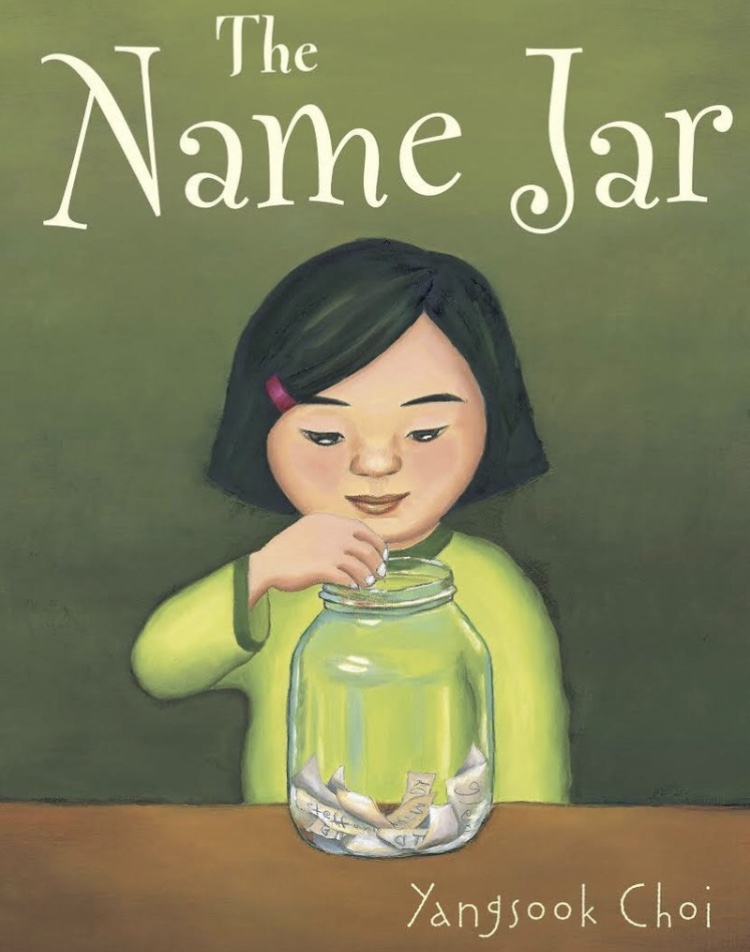
When I read the book The Name Jar. I was swept away in the wonderful illustrations and story. I definitely think it is a good book for children because it teaches them to love themselves and their culture. It also raises awareness for those who have different backgrounds from our own.

Looking at this book through a cultural lens we see and experience the difference between Unhei’s old life and new one. Her mother still keeps their culture alive by preparing traditional meals from the local Korean shop. Unhei’s main struggle in the book is trying to keep her name and culture alive in America. She debates whether to pick a new name so she won’t get teased or keep her original name. This shows what some immigrants face when coming to America.

Looking at the book through a feminist lens we see that Unhei’s dad is not in the majority of the story. He is off at work when Unhei is telling her mom about school. This reinforces the gender roles that the mother figure is the one that takes care of the kids while the father earns money to support the family. I am a little disappointed that we didn’t get to see Unhei’s dad more because he could have helped her with her problem but overall it was still a great book. If you haven’t read it yet I highly recommend doing so.

-MP

Critical Lens Theory

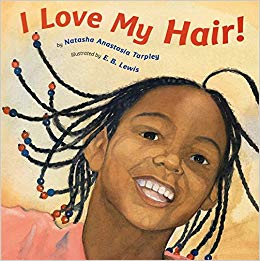
When I first read, “I Love My Hair!” by Natasha Anastasia Tarpley, I did not really think too much of it. I thought of it as a book that preached self-love and acceptance for children reading the book. Through critical lens theory, we are able to explain why people who read the same book have different ways of interpreting the text. The viewpoints about to be discussed can change the meaning for people who reading the book.

Through critical race theory, we can see that racism still flourishes in the book when Keyana, the main character, goes to school to have her fellow students make fun of her for having her hair afro style. I believe this is significant in contemporary American society because some people still have a bias against African-American men and women styling their hair the way they want it. For example, law firms still have the right not to hire African-Americans for having their hair natural or styled like that because it is “unprofessional.” While it is not in a school setting, this is a reality that many Americans face on a daily basis.

With historicism and and cultural studies theory, we can see the culture of Keyana and her family through the illustrations provided. For example, one of the images depicts Keyana’s mother and father wearing traditional African garments with the background looking like a scene from an African safari. This kind of interpretation and depiction may show the ethnic background of the author as she has written other books about identity. The work shines a positive light on African culture on a traditionally marginalized population that exists within the United States. With all of this being said, I definitely do think that the author meant to have multiple perspectives with intersection for this book.

-SK

Diversity in Tales

Modern fairy tales and large production companies such as Disney, have created a less harmful message toward the general public as well as making sure to introduce different cultures with each tale. The goal of these companies seems to be to appease people around the world by expanding their products boundaries creating a larger audience in order for them to make more money.

Before Disney popularized fairy tales there were many different spins on each traditional tale. An example of a romanticized tale would be the story of The Little Mermaid. In this tale Ariel the mermaid had decided to give up her voice in order to find true love. Harmless tale which Disney took and animated to life. The real folklore ends with Ariel not getting to be with Prince Eric and turning into sea foam or dying in other words. Clearly Disney wanted to make the story appropriate and appealing to younger audiences or else they would not have changed the true dismal ending. Each tale also had a different story in different countries today as well hundreds of years ago because of restrictions in some countries. An example of this would be the story of Cinderella.

Related image

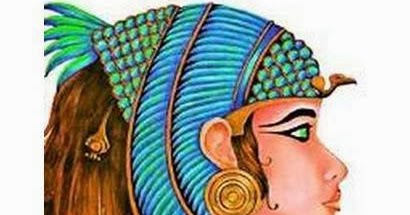
We all know (hopefully) that Cinderella was doing chores for her evil stepmother and stepsisters until she met a fairy godmother who changed her life. She was able to attend the ball and meet the prince while wearing beautiful glass slippers, leaving one behind the prince set out to find her. Once he found Cinderella they got married and it was happily ever after. Now in Egypt the story is about a girl named Rhodopis who was a slave girl stolen from Greece where she is treated poorly by Egyptian girls. She loved to dance and was given a pair of red slippers but was denied access to dance with the Pharaoh. She had a falcon steal her shoe and set it on his lap and he demanded the wearer of the beautiful slipper became his Queen.

Both stories hold the same concept however are adjusted to fit each individual culture as needed. I believe that fairy tales should be more open to diversity rather than just sticking to one culture per story because the world is not just one culture. The world itself is a diverse place and I believe our entertainment should be a reflection of that.

-Lydia C.

Diversity

When I was a child I remember the sense of magic I got from reading fairy tales and watching Disney films. I remember Belle from Beauty and the Beast being my favorite character because she liked books and looked like me. In fact most of the Disney characters looked like me. Watching Disney films as an adult it is startling to see the lack of representation of other cultures.

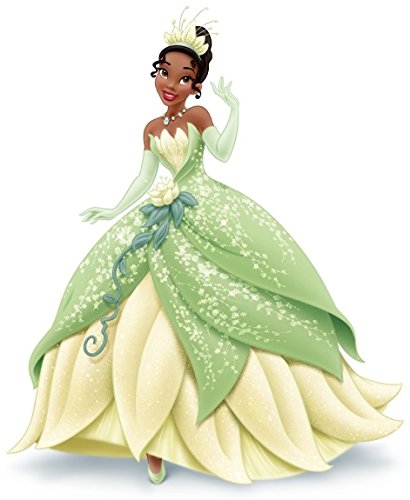
Disney is a part of most people’s childhood but does a terrible job at depicting all children. Out of the nineteen official Disney princesses only five are people of color. Two of those princesses, Tiana and Moana, came out within the last ten years which could suggest that Disney is starting to become more inclusive but still has a ways to go. A few people would blame the original fairytales the movies are based off of for not having diversity but those people would be wrong.

While it is true Disney does pull source material from many European fairy tales there are still many more fairytales from around the world. Most cultures have their own fairy tales that they share with their children or they alter ones to fit their culture. For example Snow White is often retold around the world by keeping the story mostly the same but her race changing her race so children can better identify with her. This is important for companies like Disney and children’s literature authors to understand and take to heart.

When children learn to read they look for situations and people whom they can identify with. When there is a lack of diversity children often don’t find this and can dislike reading because of it. Diversity is also important because children need to hear and understand problems that they might not encounter so they can learn to be accepting and tolerant towards those who do have these problems. Another reason diversity is important is that it can show children other cultures and differences in the world that should be praised and celebrated instead of berated on the evening news. Children need diversity and one of the best ways to represent that is through their books and movies.

-MP

Diversity within Children’s Literature

Within fairy tales, we think of prince and princesses, talking animals and evil witches, and miracles and the typical “happily ever after.” But what if I told you that the traditional “happily ever after” only counted for white cisgender heterosexual male and females? What if I told you the first African-American Disney princess did not come until 2009? Or the first Samoan Disney princess did not come until 2016? In this blog post, I will be sharing my opinions about diversity within children’s literature, placing special emphasis on racial politics of old and new fairy tales.

When Disney released The Princess And the Frog, there was mainly positive feedback surrounding the film. It was Disney’s first time including an African-American princess set in a predominantly African-American city of New Orleans. This seems like a huge step in the right direction, right? Since the release in 2009, Disney has only seen one more princess of color in action with Moana. While every little achievement can be seen as progress, we need to take into account the lack of diversity across both traditional and modern fairy tales.

Within traditional fairy tales that include princesses like Cinderella and Snow White, some scholars have claimed that those princesses (although all white) have different ethnic backgrounds. While this is certainly wrong for present-day, ethnicity meant something different to people back in the day. For example, before the end of World War II, Jewish,Sicilian, and Irish Americans were all considered “colored people.” Even before that, groups that we think of as all “white” were considered different races like the “anglo,” the “teutonic,” and the “nordic.” While today we were consider all of the mystical and magical people in traditional fairy tales as white, the authors of the actual fairy tales probably saw it as different races and ethnicities back then.

This all leads to an important question: Why must there be more diversity in children’s literature? Well, let’s start off with a statistic. 37% of the United States population are people of color, and only 13% of children’s books within the past 24 years have had multicultural content. This is not fair to a child who is starting to learn to read and is not seeing themselves reflected within the character. When I was a child, I always tried to find a character that best fit with me (both personality and appearance). Children should not have to struggle to find books that represent who they are. That’s the reason why we choose to read in the first place: to find books that show our interests and identities.

Now, I am not saying that we have to erase the traditional fairy tales that we all know dear to our hearts. Let’s just try to make children’s books as diverse as the population here in the United States.

-SK

My Favorite Childhood Book

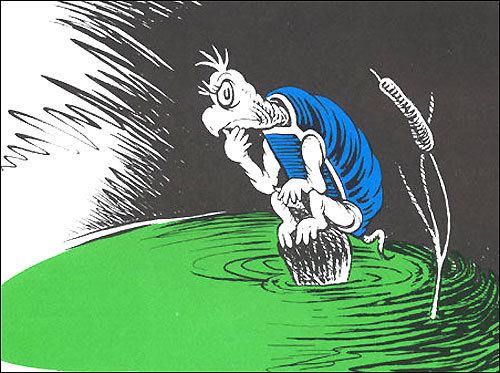
My favorite types of books to read today are mysteries or dramas. As a child I was drawn to books written by Dr. Seuss solely because we share the same birthday; March 2nd. This makes perfect sense for my favorite childhood book to be Yertle the Turtle by Dr. Seuss. This story was funny to me because Yertle the king of the pond, wanted to sit higher than the other turtles in order to see more of the world around him. He thought that the more he saw the more he ruled over. Yertle got greedy and then Mack a plain turtle had complained for all of the turtles who were hurting from being in a stack. Yertle snuffed and a little later Mack had burped disrupting the whole stack and causing every turtle to tumble. Now the turtles are free and Yertle is in the mud. I loved that all of the turtles had come together in the end because of the one hero Mack who was just like everyone else. It showed me that at a young age I could accomplish anything if I have the will power and the support to do it. I remember reading it with my brother and we both laughed every time Yertle fell because we both knew that he was mean at a young age. Who makes other people stand under you just for you to sit on top? We both agreed that this was messed up and cheered for Mack every time.

–Lydia C.

my favorite childhood book

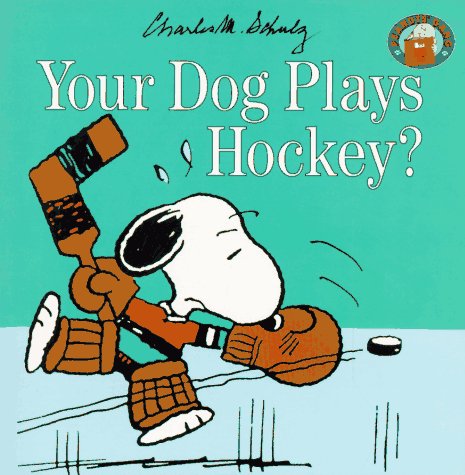
My favorite childhood book is Your Dog Plays Hockey? by Charles M. Schulz. In the book, Snoopy has been injured at an ice-skating rink and needs knee surgery. Marcie joins Charlie Brown as he waits at the hospital. In the end, Snoopy is released without needing surgery because they realize dogs don’t have knees!

I come from a big hockey family and this book has been on our shelves my entire life. It was a contribution from my dad, who used to read it to me and my brother all the time. It was an awesome way to bridge something we loved to do with reading.

I think this is a quality book for children because there is an important message built around the humor. When Marcie comes to sit with Charlie Brown at the hospital, it’s because she didn’t want him to be alone. This is a strong and supportive friendship for kids to look up to, especially around the time they are starting school. I would recommend this book for children around the preschool or first grade age range. Each page has pictures and no more than two lines of text. It’s a quick read that can help children gain an early appreciation for literature that will grow over time.

-Sam Goodreau