Within fairy tales, we think of prince and princesses, talking animals and evil witches, and miracles and the typical “happily ever after.” But what if I told you that the traditional “happily ever after” only counted for white cisgender heterosexual male and females? What if I told you the first African-American Disney princess did not come until 2009? Or the first Samoan Disney princess did not come until 2016? In this blog post, I will be sharing my opinions about diversity within children’s literature, placing special emphasis on racial politics of old and new fairy tales.
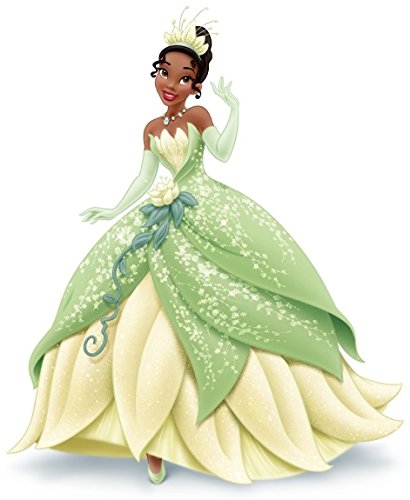
When Disney released The Princess And the Frog, there was mainly positive feedback surrounding the film. It was Disney’s first time including an African-American princess set in a predominantly African-American city of New Orleans. This seems like a huge step in the right direction, right? Since the release in 2009, Disney has only seen one more princess of color in action with Moana. While every little achievement can be seen as progress, we need to take into account the lack of diversity across both traditional and modern fairy tales.
Within traditional fairy tales that include princesses like Cinderella and Snow White, some scholars have claimed that those princesses (although all white) have different ethnic backgrounds. While this is certainly wrong for present-day, ethnicity meant something different to people back in the day. For example, before the end of World War II, Jewish,Sicilian, and Irish Americans were all considered “colored people.” Even before that, groups that we think of as all “white” were considered different races like the “anglo,” the “teutonic,” and the “nordic.” While today we were consider all of the mystical and magical people in traditional fairy tales as white, the authors of the actual fairy tales probably saw it as different races and ethnicities back then.
This all leads to an important question: Why must there be more diversity in children’s literature? Well, let’s start off with a statistic. 37% of the United States population are people of color, and only 13% of children’s books within the past 24 years have had multicultural content. This is not fair to a child who is starting to learn to read and is not seeing themselves reflected within the character. When I was a child, I always tried to find a character that best fit with me (both personality and appearance). Children should not have to struggle to find books that represent who they are. That’s the reason why we choose to read in the first place: to find books that show our interests and identities.
Now, I am not saying that we have to erase the traditional fairy tales that we all know dear to our hearts. Let’s just try to make children’s books as diverse as the population here in the United States.
-SK

 A Novel Idea
Dear SK,
I 100% agree with what you are saying. It definitely isn’t fair that kids won’t be able to find characters that fit them when they read. I also liked how you included the percentage of multicultural children’s books within the past 24 and how we need to increase that number.
-MP
LikeLike
Dear SK,
I believe it is unfair as well that children are unable to find many characters that represent their cultures around the world. I would like to know where you got these statistics from just so that I can be sure these statistics are accurate to this present day. I know that now in many urban schools students are able to read books about children of many diversities and children that look like them however I have noticed that these stories are broad. They are relatable among many cultures. Other than that I love that this was one thing that had boggled your mind as well as my own.
-LC
LikeLike